|
 5(a).
The electrolysis of molten anhydrous lead(II) bromide 5(a).
The electrolysis of molten anhydrous lead(II) bromide
The products of electrolysing lead bromide are lead metal and bromine gas
You can electrolyse molten compounds
as long as they are ionic compounds, so that on melting, there free ions to move
to carry the current to facilitate the electrolysis process of splitting the
compound into its constituent elements.
Electrolysing molten salts with carbon electrodes
Inert carbon
(graphite)
electrodes are dipped into molten salt which has been strongly heated in a
crucible. It is difficult to collect the gases at
the electrodes!
The salts may be very high melting, so sometimes a small
amount of another salt impurity is added to lower the melting point.
The electrolyte molten lead(II) bromide
PbBr2(l),
provides a high concentration of lead(II) ions Pb2+
and bromide ions Br– to carry the current during the
electrolysis process.
Remember that melting an ionic compound breaks
down the strong ionic bonding sufficiently to allow the ions to freely
move around and carry the electric current.
The electrolysis will only take place when
electricity is passed through the molten lead bromide.
This is a good teacher demonstration in the school
laboratory – brown vapour and silvery lump provide good evidence of
what's happened.
At the end of the experiment its best to pour
the molten salt onto cold ceramic surface. Let the residue cool and
break it up to find the silvery lump of lead - to prove you do get lead
from the electrolysis of lead bromide, the orange-brown vapour of
bromine is pretty obvious and pretty obnoxious! PLEASE do in a fume
cupboard!
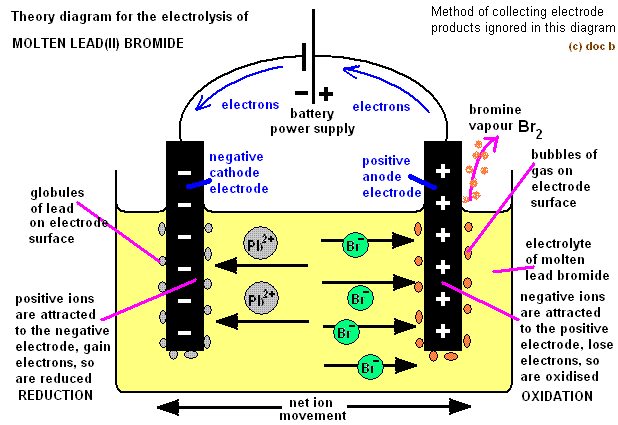
The electrode reactions and products of the
electrolysis of the molten ionic compound lead bromide (the electrolyte) are illustrated by the
theory diagram above.
This is quite a simpler electrolysis situation
where the ionic compound lead bromide on melting provides a highly concentrated
mixture of positive lead ions and negative bromide ions.
The
half-equations for the electrolysis of lead(II)
bromide.
(a) The negative cathode electrode reaction for the electrolysis
of molten lead(II) bromide
The positive lead(II) ions are attracted to
the negative electrode and are discharged to form molten
lead
Cathode (-):
Pb2+(l)
+ 2e– ==> Pb(l)
half-equation: positive ion reduction by
electron gain, lead ions to lead atoms
This is a reduction reaction
because the positive lead ions gain electrons to form neutral lead atoms.
(b) The positive anode electrode
reaction for the electrolysis of molten lead bromide
The negative bromide ions are
attracted to the positive anode electrode and discharged to form bromine
vapour, bromide ions to bromine molecules.
Anode (+):
2Br–(l)
– 2e– ==> Br2(g)
or
2Br–(l)
==> Br2(g) + 2e–
half-equation: negative ion oxidation by
electron loss
This is an
oxidation reaction
because the negative bromide ions lose electrons to form neutral
bromine molecules.
Extra comments on the
electrolysis of lead bromide and other molten ionic compounds
1. Overall equation for the electrolysis of
molten lead bromide:
PbBr2(l) ==> Pb(l) + Br2(g)
2. Electrolysis of molten bromide salts(l)
or their concentrated aqueous solution(aq) or conc. hydrobromic acid(aq) to make bromine.
3. It takes 2 electrons to reduce on lead(II) ion to a lead atom
(reduction) and it takes the removal of 1 electron from each of 2 bromide
ions (oxidation) to form a bromine molecule. Therefore for the same quantity
of electric current the mole ratio of
Pb : Br2
is 1 : 1.
|
SUMMARY OF PRODUCTS FROM THE ELECTROLYSIS
OF LEAD(II) BROMIDE
with inert carbon electrodes |
|
Electrolyte |
negative cathode
product |
negative electrode
cathode half-equation |
positive anode
product |
positive electrode
anode
half-equation |
|
molten
lead(II) bromide
PbBr2(l) |
molten
lead |
Pb2+(l)
+ 2e– ==> Pb(l)
reduction,
electron gain |
bromine vapour |
2Br–(l)
– 2e– ==> Br2(g)
or
2Br–(l)
==> Br2(g) + 2e–
oxidation, electron loss |
TOP OF PAGE
and INDEXES
(b) to (d) Electrolysis of other molten ionic
compounds
Each provides a positive ion and a negative
ion, and this molten mixture of ions constitutes the electrolyte.
(b)
The electrolysis of molten
anhydrous calcium chloride CaCl2(l)
Electrode
half-equations:
(i) solid/molten
calcium formed at the cathode
Cathode (-):
Ca2+(l)
+ 2e– ==> Ca(s)
half-equation: a reduction
electrode reaction - electron gain at cathode, positive calcium ions to
neutral calcium atoms
(ii)
chlorine gas formed at the anode
Anode (+):
2Cl–(aq)
– 2e– ==> Cl2(g)
half-equation: an oxidation electrode reaction - electron loss at anode,
negative chloride ions to neutral chlorine molecules
or
2Cl–(aq)
==> Cl2(g) + 2e–
This is the basis for the industrial
production of calcium metal
(c) The
electrolysis of molten
anhydrous zinc chloride
This is a safer salt to use than lead
chloride, less toxic, but chlorine is a very harmful gas.
You should end up with a small lump of zinc, but chlorine gas is given
off, so this electrolysis needs to be done in a fume cupboard where you can
safely see the evolution of the green gas which bleaches litmus paper white.
(If you use damp blue litmus, chlorine is an
acidic gas and turns the litmus red (slightly acidic gas) before bleaching it white because it is
a powerful oxidising agent).
Electrode half-equations:
cathode (-):
Zn2+
+ 2e ==> Znhalf-equation: a reduction
electrode reaction - electron gain, zinc ions to neutral zinc atoms
anode (+):
2Cl ==> Cl2 +
2e–
or
2Cl–(aq)
– 2e– ==> Cl2(g)
half-equation: an oxidation electrode reaction - electron
loss, negative chloride ions to neutral chlorine molecules
(d) The electrolysis of molten
aluminium oxide Al2O3(l)
You can't do this in a school
laboratory, it is an industrial process!
Electrode
half-equations:
(i) molten
aluminium is formed at the negative cathode
Cathode (-):
Al3+(l)
+ 3e– ==> Al(l)
half-equation: a reduction
electrode reaction - electron gain at cathode, positive aluminium ions
to neutral aluminium atoms
(ii) oxygen
gas is formed at the positive electrode
Anode (+):
2O2–(l)
– 4e– ==>
O2(g)
half-equation: an
oxidation electrode reaction
- electron loss at anode, negative oxide ions to neutral oxygen molecules
or
2O2–(l)
==>
O2(g) + 4e–
The
industrial method for the extraction of aluminium from its ore uses
electrolysis.
See
The extraction of
aluminium from purified molten bauxite ore
The mole ratio of Al : O2 is 4 : 3 since the
overall electrolysis equation for the industrial process is:
2Al2O3(l)
==> 4Al(l) + 3O2(g)
(e)
Learning objectives for the electrolysis of
molten lead bromide, calcium
chloride, zinc chloride and aluminium oxide
Know that electrolysis requires a conducting solution of ions (electrolyte
of molten lead bromide, calcium chloride, zinc chloride)
and two inert solid conducting electrodes e.g. graphite (carbon) or platinum
(expensive!).
Know that the electrolyte here contains free moving metal ions and
non-metal ions from the melted salt.
Know that electrolysis will only happen if a d.c. electrical current is
passed through the molten salt and reduction and oxidation reactions occur
on passage of the electric current.
Where practicable in a school or college laboratory, be able to describe
the apparatus required to electrolyse molten salts and be able to explain and understand the formation of the electrolysis
products by:
knowing that the positive ions are reduced by electron gain and
discharged at the negative cathode as metal atoms (lead, zinc, calcium),
knowing that the negative chloride or bromide ions are oxidised by electron loss and
discharged at the positive anode as chlorine or bromine molecules,
and be able to write out the electrode equations (half equations) for the formation of
neutral metal atoms by electron gain reduction and chlorine or bromine gas molecules
from the oxidation of bromide or chloride ions by electron loss.
From the electrode equations, be able to explain why the mole ratio e.g.
of lead/zinc/calcium atoms to bromine/chlorine molecules is
theoretically 1
: 1
Know how to test for chlorine gas formed from the electrolysis of a chloride
salt using inert electrodes and recognise brown vapour formed at the anode is an
indication that bromine was formed in the electrolysis of molten bromide salts.
TOP OF PAGE
and INDEXES
(f)
Key points about the Electrolysis of Molten Lead(II) Bromide – Core Academic
Content
Process
- Electrolyte:
Molten lead(II) bromide (PbBr2).
- Electrodes:
Inert (graphite).
- Products:
- Cathode (reduction):
Pb2+ + 2e- ==> Pb → Lead metal
deposited.
- Anode (oxidation):
2Br- ==> Br2 + 2e- →
Bromine gas released.
- Overall reaction:
PbBr2(l) ==> Pb(l) + Br2(g)
Other Molten
Chlorides (e.g., NaCl, CaCl2,
AlCl3)
- General rule:
- Cathode:
Metal cations reduced to metal.
- Anode:
Chloride ions oxidised to chlorine gas.
Applications of the
electrolysis of lead bromide
- Lead extraction
(though less common industrially today).
- Chlorine production
by-product from molten chlorides.
Exam Tips for
questions involving the electrolysis of lead bromide
- Always state both products:
metal at cathode, non-metal at anode.
- Write half-equations clearly:
Balance charges and atoms.
- Remember molten versus aqueous:
Molten salts give only metal + non-metal; aqueous solutions can
give hydrogen/oxygen.
- Gas tests:
Bromine → brown vapour; Chlorine → bleaches damp litmus paper.
Common
Misconceptions about the electrolysis of lead bromide
- “Electrolysis of molten PbBr2
produces hydrogen” → Correction: Hydrogen only forms in aqueous
solutions, not molten salts.
- “Electrons move through the
electrolyte” → Correction: Electrons move in the external circuit; ions
move in the molten salt.
- “Molten salts conduct because of
free electrons” → Correction: They conduct because of mobile
ions, not electrons.
- “All electrolysis produces
gases” → Correction: Metals can be deposited at the cathode (e.g.,
lead, sodium).
Revision Strategy
for the electrolysis of lead bromide
- Draw annotated diagrams
of molten electrolysis apparatus.
- Practice half-equations
for different molten salts.
- Use comparative tables
(molten versus aqueous electrolysis).
- Review exam board command words
(“describe,” “explain,” “evaluate”).
What next?
Associated Pages
 Simple Quiz on the basics of electrolysis
Electrolysis Quiz (GCSE 9-1 FT Foundation Level (easier)
Electrolysis Quiz (GCSE 9-1 HT Higher Level (harder)
Electrolysis Quiz including calculations (GCSE 9-1 HT Higher Level)
ELECTROCHEMISTRY INDEX
ALL my GCSE level Chemistry Notes
(~US grades 8-10)
Advanced pre-university Chemistry
notes (~US grades 11-12 K12 honors)
BIG
website, you need to take time to explore it [SEARCH
BOX]
email doc
brown - comment - query?
|
Website content © Dr
Phil Brown 2000+. All copyrights reserved on Doc Brown's Chemistry revision notes, images,
quizzes, worksheets etc. on electrolysis of calcium chloride & zinc
chloride electrolysis with lots of
diagrams, electrode equations and uses of electrolysis, revision
notes suitable for
IGCSE/GCSE level chemistry courses (US grades 8, 9, 10) Copying of website material is NOT
permitted. Exam revision summaries and references to science exam
board course exams and specifications
are unofficial.
keywords and phrases:
revision study notes for AQA Edexcel OCR IGCSE/GCSE chemistry
topics modules on the apparatus needed for electrolysis experiments
investigations electrolyte how to do the electrolysis of calcium
chloride electrolysis of calcium chloride & zinc chloride electrolysis of zinc chloride half-equations
describing the electrolysis of molten lead bromide with carbon
electrodes anode product equations cathode product equations,
Based on the syllabus-specifications
for students taking the IGCSE/GCSE level chemistry examinations summary
revision notes and key points on electrolysis of lead bromide for students taking the AQA
igcse/gcse chemistry notes on electrolysis of lead bromide, Edexcel gcse
chemistry notes on electrolysis of lead bromide, OCR 21st century GCSE
chemistry notes on electrolysis of lead bromide, OCR gateway
GCSE chemistry notes on electrolysis of lead bromide, WJEC gcse chemistry notes on
electrolysis of lead bromide, CCEA
gcse chemistry notes on electrolysis of lead bromide for students taking CIE Cambridge igcse
chemistry, or any other GCSE or IGCSE level chemistry exams notes on
electrolysis of lead bromide, useful for US grade 9-10 chemistry courses,
electrolysis of molten calcium chloride & zinc
chloride the importance of electrolysis of molten lead bromide
in GCSE level chemistry, What you need to know about electrolysis of
molten lead bromide for
GCSE level
chemistry,
electrolysis of calcium chloride & molten zinc chloride the use of
electrolysis of molten lead bromide knowledge in GCSE level chemistry, Examples of
electrolysis of molten lead bromide explained
when studying GCSE level chemistry, What is
the significance of electrolysis of molten lead bromide in GCSE level chemistry, describing and
electrolysis of calcium chloride & zinc chloride the theory of
electrolysis of molten lead bromide when studying GCSE level chemistry, revision
notes for electrolysis of molten lead bromide in exams, online help for understanding
electrolysis of molten lead bromide, exam revision
notes for electrolysis of molten lead bromide, what do I need to learn about
electrolysis of molten lead bromide? revision summary for
electrolysis of molten lead bromide, learning notes for electrolysis
of molten lead bromide, help to pass the electrolysis of molten lead
bromide
topic in an exam question, how to prepare for questions on electrolysis
of molten lead bromide in a GCSE
chemistry examination?
|
What next?
Associated Pages
|